
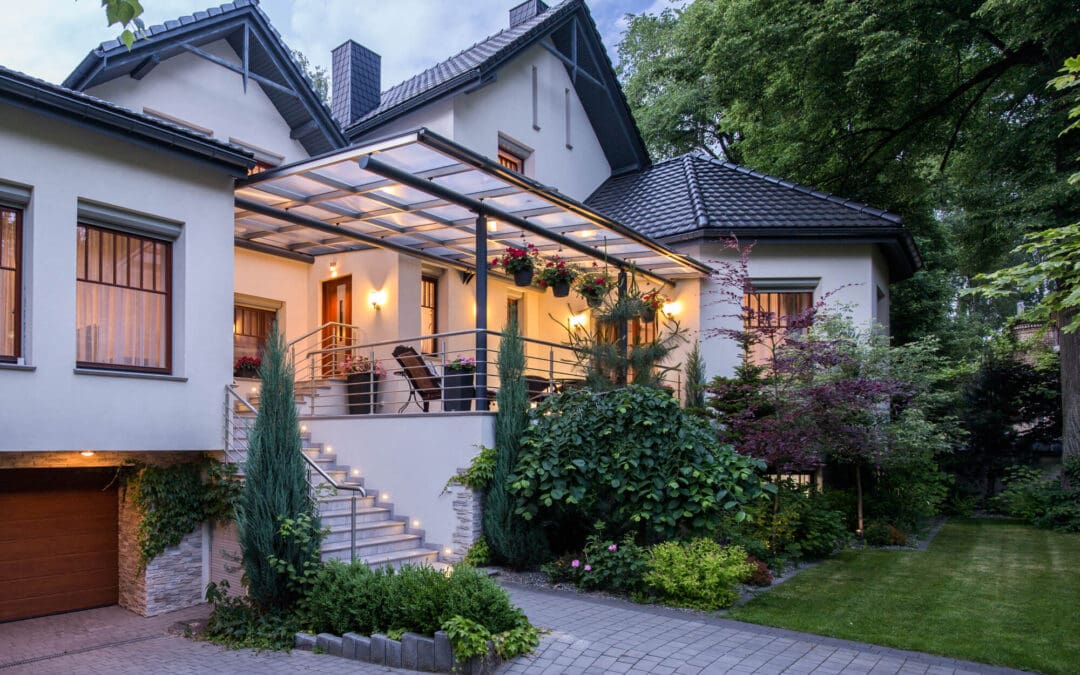
A property that looks polished and well-maintained during the day may read as flat, dated, or unwelcoming at night when the exterior lighting hasn’t been updated to match the care that’s gone into every other aspect of the home. Improving lighting isn’t just about safety and security, though it contributes to both. It’s about creating a nighttime identity for the property that reflects the same level of intention as the landscaping, the paint, and the front door. The homes that make a strong impression at night are those where the lighting was approached as a design element rather than a utility.
The Exterior Lighting Decision That Defines the Home’s Character
The fixture is the element that most directly communicates the home’s architectural character. An undersized sconce at a wide entry, a dated flush-mount over the garage, or a brass lantern on an otherwise contemporary home undermines coherence. Selecting fixtures proportionally appropriate to the mounting location, scaled to door height and entry width, and consistent in finish and style with the home’s architectural language is the lighting decision that most elevates nighttime character. Matching the entry sconce finish to the house numbers, mailbox, and garage hardware creates a cohesive exterior palette that reads as intentional.
How to Improve Exterior Lighting With Depth and Dimension
A single fixture at the entry illuminates the entry. A layered lighting system illuminates the property. Uplighting at the base of architectural columns, significant trees, or facade features creates drama by directing light upward against surfaces that overhead lighting would flatten. Downlighting from soffit-mounted or adjustable spots creates pools of warm light that define areas without the harsh uniformity of a fully lit facade. Path lighting along the approach guides movement while contributing to the property’s nighttime composition. The exterior lighting layer most homeowners leave out entirely is the accent layer, small, targeted fixtures that highlight a specimen plant, a textured wall, or an architectural feature that disappears at night without dedicated illumination. It’s this layer that elevates an exterior lighting scheme from functional to designed.
The Finishing Details That Change Everything
The bulb specification is the detail that affects every other decision; the color and quality of light a fixture produces determines how the property looks at night regardless of the fixture’s design. Warm white LEDs in the 2700K to 3000K range produce the amber-toned, inviting quality most people associate with a well-lit home. Bulbs above 3500K produce a cooler, bluer light that reads as commercial or institutional regardless of the fixture’s design. All exterior lighting fixtures in the same zone should use the same color temperature; mixing warm and cool sources produces a disjointed nighttime appearance. Wet-rated fixtures in locations exposed to rain and damp-rated fixtures in covered locations are the specification details that determine whether the investment lasts.
Frequently Asked Questions (FAQs)
How do I choose the right size exterior lighting fixture for my entry?
The entry fixture should be proportional to the door height and entry scale, not to a generic standard. For a standard eight-foot door, a fixture between twelve and eighteen inches tall is typically appropriate; taller entries warrant taller fixtures. For pairs flanking a door, each fixture should be approximately a quarter to a third of the door’s width.
What color temperature is best for exterior lighting?
The 2700K to 3000K range produces warm, amber-toned light that reads as welcoming and flattering to both landscaping and facade materials.
How many layers of exterior lighting does a home need?
Most homes benefit from three: ambient lighting at the entry and facade that establishes nighttime presence, path and area lighting that guides movement, and accent lighting that highlights architectural or landscape features. The ambient layer is what most homes have; path lighting is what most add when they improve exterior lighting; the accent layer is what distinguishes a designed system from an improved one. The appropriate number of layers depends on the property’s size, landscape, and features.
How do I improve exterior lighting without rewiring?
Most impactful exterior lighting improvements don’t require rewiring. Replacing an existing fixture in the same location uses the existing electrical box and wiring. Low-voltage path lighting connects to a transformer that plugs into a standard exterior outlet. Solar-powered fixtures require no wiring at all. Improvements that require new electrical runs do require a licensed electrician, but these represent a minority of the improvements most homeowners want to make.
Does exterior lighting add to home value?
Yes, exterior lighting contributes to curb appeal, which consistently influences buyer first impressions and perceived value. A home with a designed lighting system presents a more polished nighttime appearance than one with basic or dated lighting. Real estate professionals consistently identify exterior lighting as one of the curb appeal improvements with the strongest return on investment relative to cost.
Jamie Schaefer, Professional Home Inspector, provides home inspection services to Southwest Florida, The Villages, and the surrounding cities and towns in Central Florida. If you’re buying or selling a property, contact us to request an appointment.